Updated on
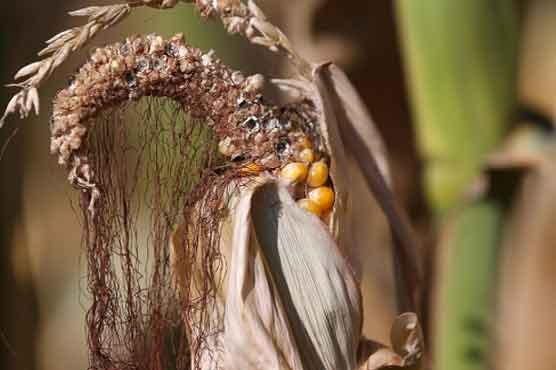
Summary US corn growers could have their worst crop in a generation due to drought.
The US is the worlds biggest producer of corn, soybeans and wheat, and the United Nations has warned of higher global food prices as the dry spell withers farms across the Midwest.The director-general of the U.N.s Food and Agricultural Organization has asked the U.S. for an immediate, temporary suspension of its putting aside 40 percent of the corn drop for biofuel.Agriculture Secretary Tom Vilsack, in a statement supplied exclusively to The Associated Press, insisted Friday that U.S. farmers and ranchers remain resilient and that the country would continue to meet demand.Americans shouldnt see immediate increases in food prices due to the drought, Vilsack said as he visited drought-stricken Nebraska.The Agriculture Department slashed the U.S. projected corn production to 10.8 billion bushels, the lowest production since 2006. Thats down 17 percent from its forecast last month of close to 13 billion bushels.Soybean production was forecast at 2.69 billion bushels, a 12 percent decline from last year.Fridays revised outlook comes months after corn farmers expected this to be a record year when they planted, sowing the most acres since 1937.The USDA earlier this week said exactly half of the nations corn crop was rated poor to very poor. Some 39 percent of soybeans now fall under those two categories.The nations rangeland and pastures are faring even worse, with roughly three-fifths rated to be in poor to very poor shape the largest area affected in 18 years.While consumers may see modest price increases, the bigger fallout will come in 4 to 6 percent price increases for beef and pork as many ranchers sell off their livestock, said Rick Whitacre, a professor of agricultural economics at Illinois State University.Youre going to see the ripple of this go out for quite a distance, Whitacre said.Livestock farmers and ranchers seeing their feed costs rise are demanding that the Environmental Protection Agency waive production requirements for corn-based ethanol for biofuel.Jose Graziano da Silva, head of the U.N.s food agency, echoed that request in an opinion piece in The Financial Times newspaper on Thursday. An immediate, temporary suspension of that mandate would give some respite to the market and allow more of the crop to be channelled towards food and feed uses, he wrote.On Thursday, the latest weekly U.S. Drought Monitor map showed that the drought conditions in Midwest states continue to worsen. The expanse still gripped by extreme or exceptional drought the two worst classifications rose to 24.14 percent, up nearly 2 percentage points from the previous week.Thats because key farm states didnt get as much benefit from rains as elsewhere after temperatures in July broke a record high set during the Dust Bowl of the 1930s.The National Oceanic and Atmospheric Administration reported Wednesday that this years first seven months were the warmest on record for the nation.