Updated on
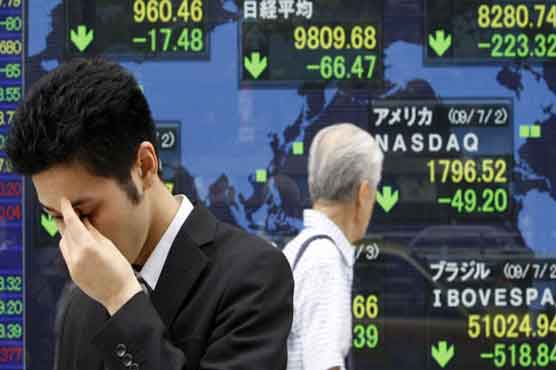
Summary Asian markets fall as weakness in Chinese manufacturing suggests slowdown in economy may worsen.
The state-affiliated China Federation of Logistics and Purchasing said its purchasing managers index, or PMI, fell 2.9 percentage points to 50.4 percent in May, just above the 50 level that signifies expansion. The index was at 53.3 in April.New orders weakened more than 4 percentage points while inventories rose and prices softened due to weaker demand.Japans Nikkei 225 index fell 0.7 percent to 8,479.12 and South Koreas Kospi dropped 0.2 percent to 1,839.73. Australias S&P/ASX 200 index lost 0.3 percent to 4,064.20. Benchmarks in Indonesia and New Zealand were also lower.But Hong Kong and mainland Chinese shares rose in tandem with investor hopes that China will now launch more measures to help its economy. Hong Kongs Hang Seng added 0.3 percent to 18,682.60.The data is so bad, and so clearly points to slowdown of growth momentum, that it will likely help convince policy makers that the economy needs more stimulus, Dariusz Kowalczyk, senior economist at Credit Agricole CIB in Hong Kong, said in an email.We still do not expect announcement of a big number package like during the Lehman crisis, but rather a series of measures to stimulate infrastructure spending and lending.Meanwhile, there is still no agreement over how to solve Europes debt crisis. Stronger countries like Germany want governments to cut spending, but voters in weaker countries like Greece have shown they are in no mood for more fiscal pain.The head of the European Central Bank told European Union leaders that the 17-country euro currency union is unsustainable in its current form.The euro has fallen nearly 7 percent in May as Europes debt crisis intensified. The likelihood of Greece leaving the euro grew in early May when parties opposed to the terms of the countrys financial rescue won at the polls. New elections are planned for next month.This week, Spain became the new focus of the crisis after its borrowing rates soared to nearly 7 percent, a level that is considered unsustainable for a country to continue funding itself by selling bonds to investors.Greece, Portugal and Ireland were forced to ask for financial aid after their rates went over 7 percent.In the U.S., stock markets were lower after the government said the number of people applying for unemployment benefits rose to a five-week high, and that the economy grew at an annual rate of 1.9 percent in the first three months of the year, below its earlier estimate of 2.2 percent.Weekly applications for unemployment aid rose 10,000 to 383,000, the Labor Department said.The Dow Jones industrial average fell 0.2 percent to 12,393.45. The Standard & Poors 500 index fell 0.2 percent to 1,310.33. The Nasdaq composite index fell 0.4 percent to 2,827.34.Benchmark oil for July delivery was down 29 cents to $86.24 per barrel in electronic trading on the New York Mercantile Exchange. The contract fell $1.29 to settle at $86.53 in New York on Thursday.In currencies, the euro fell to $1.2344 from $1.2366 late Thursday in New York. The dollar rose to 78.47 yen from 78.33 yen.