


IS jihadists close in on key Syria border town
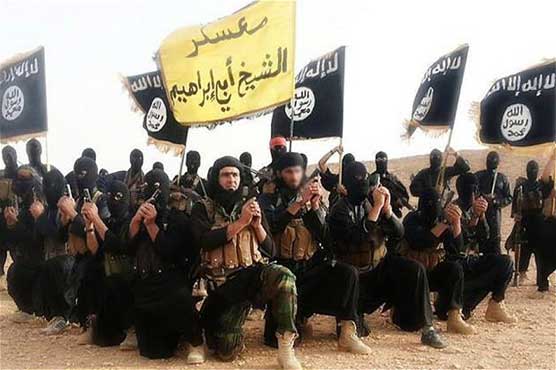
Turkey had refused to join the coalition while dozens of its citizens were being held by IS.
Damascus (AFP) - Islamic State group fighters closed in Monday to within only a few kilometres of a key Kurdish town on Syria s border with Turkey, despite new air strikes by the US-led coalition.
NATO member Turkey deployed tanks to reinforce its side of the border and said parliament would this week debate joining the coalition against the jihadists operating on the country s doorstep.
The alliance carried out new raids against IS positions, but the jihadists still managed to advance within five kilometres (three miles) of the strategic Syrian town of Ain al-Arab, known as Kobane to the Kurds, a monitor said.
It was the closest the militants had come to the town since they began advancing toward it nearly two weeks ago, sending tens of thousands of mostly Kurdish refugees across the border, said the Syrian Observatory for Human Rights.
As they advanced, the jihadists fired at least 15 rockets at the town centre, killing at least one person. Other rockets hit the border zone.
© AFP
Turkish Army tanks point towards the Syrian city of Kobani, on September 29, 2014, near Suruc, after three mortars hit the Turkish side of the border
© AFP Bulent Kilic
Across the frontier, Turkey s army was seen deploying tanks and armoured vehicles to the town of Mursitpinar, after stray bullets hit Turkish villages and at least three mortar shells crashed nearby.
In Ankara, parliamentary speaker Cemil Cicek was reported to have said that motions for discussions on Turkey joining the coalition could land with lawmakers on Tuesday.
Prime Minister Ahmet Davutoglu said they would be debated on Thursday.
Turkey had refused to join the coalition while dozens of its citizens -- including diplomats and children -- were being held by IS after being abducted in Iraq.
After they were freed, President Recep Tayyip Erdogan said Turkey s position had changed, signalling a more robust stance towards the group.
"We will hold discussions with our relevent institutions this week. We will definitely be where we need to be," Erdogan said on Sunday. "We cannot stay out of this."
- Strikes in north Syria -
The coalition has been carrying out strikes against jihadists inside Syria for nearly a week, with US and Arab aircraft taking part in the raids.
© AFP
The alliance against the Islamic State (IS) group
© AFP
Central Command, which oversees American forces in the Middle East, said the United States and its allies struck eight targets in Syria and three in Iraq on Sunday night and on Monday.
In the eastern Syrian province of Deir Ezzor, strikes destroyed an IS armed vehicle and an anti-aircraft artillery transporter, it said.
In Raqa, the de facto headquarters of IS, two strikes hit jihadist compounds near the provincial capital, while near Minbej two other raids struck an IS training camp and vehicles in a staging area adjacent to a grain storage facility used by the jihadists as a logistics hub.
The statement said initial indications were that the attacks were successful.
But the Observatory, which reported the same strikes, said civilians were believed to have been killed in the raid on the grain storage facility.
© AFP
A US Navy photo shows an F/A-18F Super Hornet landing on the aircraft carrier USS George H.W. Bush (CVN 77) after conducting strike missions against jihadists
© US Navy/AFP/File Brian Stephens
The United State began its aerial campaign in Syria on September 23, expanding strikes that began in August against IS positions in Iraq.
So far, the strikes have killed at least 211 IS jihadists and 22 civilians in Syria, according to the Britain-based monitor.
The coalition has attracted dozens of countries, though only a handful of Arab allies -- Saudi Arabia, the United Arab Emirates, Bahrain, Qatar and Jordan -- are participating in the strikes on Syrian soil.
On Monday at the UN General Assembly, Syria s foreign minister hit out at countries which had supported Islamists, in an implicit attack on Gulf nations.
Combating the Islamist threat "is certainly possible through military strikes," said Walid Muallem. "But most importantly, to do so through stopping states that arm, support, train, fund and smuggle those terrorist groups."
